
NCLEX Retake: What to Do After Failing the NCLEX Exam (2026 Guide)
Not passing the NCLEX on your first attempt doesn’t mean you can’t become licensed. It means something in your preparation, reasoning, or exam-day approach needs to change before your next attempt, and an NCLEX retake is your opportunity to make that change deliberately rather than by chance.
The most useful response right now isn’t to jump straight back into studying the same way you did before. It’s to understand what actually happened, review your Candidate Performance Report if you received one, identify your genuine weak areas, and build a more targeted strategy before you register for another attempt.
What Is an NCLEX Retake?
An NCLEX retake is simply another attempt at the exam after an unsuccessful result. Retake procedures, including eligibility confirmation and registration, are managed through your nursing regulatory body (NRB) rather than a single universal process, which means the exact steps can differ depending on where you’re seeking licensure.
Before doing anything else, it’s worth revisiting your NCLEX registration guide and NCLEX eligibility requirements resources, since a retake still requires you to meet current eligibility rules and complete registration again, not simply schedule a new appointment.
What Should You Do If You Do Not Pass the NCLEX?

A structured sequence tends to work better than jumping straight back into random review. Our NCLEX results guide covers the result process in detail, but in terms of what comes next specifically:
- Review your official result information from your nursing regulatory body.
- Obtain and carefully review your Candidate Performance Report, if you received one.
- Identify which content areas and skill types were genuinely weakest.
- Honestly review your previous preparation strategy and where it fell short.
- Build a new, targeted study plan based on what you’ve found.
- Complete focused practice on your specific weak areas.
- Strengthen clinical judgment and reasoning skills, not just content recall.
- Confirm your retake eligibility and registration requirements with your NRB.
- Schedule your next attempt only once you feel genuinely prepared, not on a fixed timeline alone.
How the Candidate Performance Report Can Help You Prepare for a Retake
Your Candidate Performance Report is the most direct source of information you have about what happened on your last attempt. It breaks your performance down by content category, giving you a sense of where your preparation was strongest and where it needs the most rebuilding.
Rather than treating every category as equally urgent, use the report to prioritize. Our NCLEX Candidate Performance Report guide walks through how to read the report’s categories and turn them into an actual study plan, so it’s worth reviewing in full before you start reworking your preparation.
Why You Should Not Simply Repeat the Same Study Plan
It’s a natural instinct to go back to the same materials and routine that got you through nursing school, just with more hours added. But if that approach didn’t produce a passing result the first time, repeating it unchanged often produces a similar outcome.
A few patterns show up repeatedly in candidates preparing for a second attempt: studying without ever analyzing where the previous weaknesses actually were, answering large numbers of practice questions without reviewing rationales, memorizing answers instead of understanding the reasoning behind them, treating clinical judgment as secondary to content review, poor pacing or energy management across a long study period, skipping review of incorrect answers, spreading attention across too many resources at once, and studying in inconsistent bursts rather than a sustainable rhythm. Our NCLEX mistakes to avoid guide covers these patterns in more depth if you want to check your own preparation against them.
How to Build a Better NCLEX Retake Study Plan
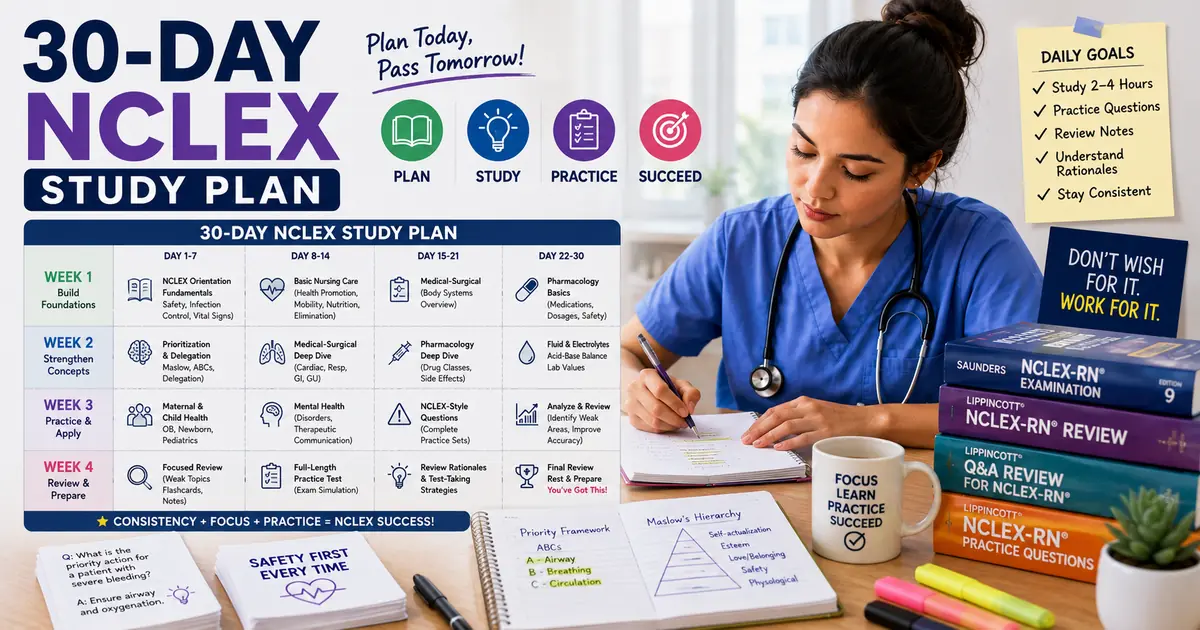
A retake study plan should look different from your first one, specifically because it’s informed by information your first attempt didn’t give you. Structure your review around your CPR results rather than starting from the beginning as though nothing from your first attempt mattered.
Cover your content gaps first, since these tend to be foundational. Layer in practice questions deliberately, slowing down for rationale review rather than chasing volume. Dedicate real time to clinical judgment and NGN-style reasoning, not just recall-based content. Track your progress so you can see genuine improvement rather than relying on how confident you feel. If a structured timeline helps you stay consistent, a 30-Day NCLEX Study Plan can be adapted around your specific weak areas rather than followed as a generic template. And build in rest and sustainable pacing — burnout heading into a retake tends to undo more progress than it protects.
How Many NCLEX Practice Questions Should You Do Before a Retake?

There’s no specific number that guarantees a different outcome, and claims suggesting otherwise aren’t accurate. What matters is the quality of your review, not the total count of questions answered.
For every practice question, focus on understanding why the correct answer is correct and why the other options are not, rather than just checking whether you got it right. Use your results to identify which weaknesses keep recurring, and deliberately practice scenarios that feel unfamiliar rather than sticking to question types you’re already comfortable with. Our NCLEX practice questions guide covers this approach in more depth, including how to use rationale review to build genuine understanding rather than memorized patterns.
Should You Use NCLEX Coaching Before a Retake?

Structured coaching isn’t necessary for every candidate, but it tends to be genuinely useful in specific situations: if you’ve failed more than once, if you’re struggling to identify what actually went wrong, if you need external accountability to stay consistent, if you find it hard to understand or apply rationales on your own, or if you’re not sure how to structure a preparation plan around your CPR results.
NCLEX coaching for nurses can provide an outside perspective on patterns that are often difficult to see clearly from the inside, particularly after an emotionally difficult result. Coaching support doesn’t guarantee a passing result on your next attempt, but it can help make your preparation more targeted than working through it entirely alone.
When Should You Register for the NCLEX Retake?

Before registering, confirm your current eligibility status, application status, and your NRB’s specific retake rules, since these can vary by jurisdiction and change over time. This includes confirming any required waiting period, whether you need a new Authorization to Test, and what registration steps apply to a retake specifically versus a first attempt.
According to NCSBN’s official policy, candidates can generally retest 45 days after their previous exam administration, though individual nursing regulatory bodies may require a longer waiting period. Because this detail varies, revisit our NCLEX registration guide and NCLEX eligibility requirements resources, and confirm the current specifics directly with your NRB before scheduling anything.
How to Know You Are Ready for Another NCLEX Attempt

Readiness isn’t about hitting a specific percentage on a practice test. It’s better reflected in a handful of practical indicators: consistent performance across multiple practice sessions rather than one strong outlier, genuine understanding of your previous weak areas rather than surface familiarity, the ability to explain rationales in your own words rather than recognizing them when you reread them, noticeably improved clinical judgment on scenario-based questions, comfort with Next Generation NCLEX formats specifically, steadier performance under timed, realistic testing conditions, a study routine you’ve actually sustained rather than one you’re hoping to start, and confidence that comes from that preparation rather than from optimism alone.
If you’re unsure where you currently stand, revisiting the fundamentals in NCLEX preparation for nurses can help you honestly assess your starting point before committing to a retake date.
NCLEX Retake Mistakes to Avoid
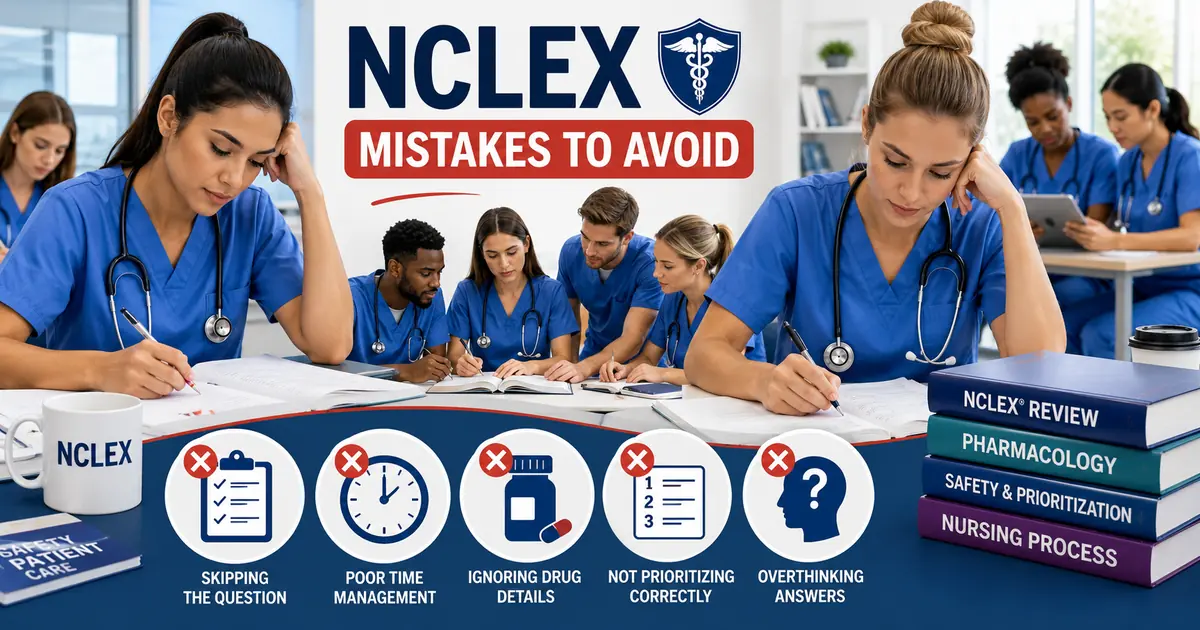
Many of the mistakes that affect a retake are the same ones that can affect a first attempt, just with higher stakes attached. Rather than repeating that ground here, our NCLEX mistakes to avoid guide covers these patterns in detail and is worth reviewing specifically with your previous attempt in mind.
Final Thoughts on Retaking the NCLEX
A failed attempt is information, not a verdict. It tells you specifically where your preparation, reasoning, or test-day approach needs to change, provided you’re willing to look at it honestly rather than repeating the same plan out of familiarity. Use your official result, your Candidate Performance Report, and an honest review of your previous preparation to build something genuinely more targeted for your next attempt.