NCLEX Results: When You Get Your Score and What Happens Next (2026 Guide)
The exam is over, but for a lot of candidates, the hardest part starts right after the computer shuts off. NCLEX results don’t arrive instantly, and understanding how the result process actually works can make the waiting period a lot less stressful than obsessively refreshing a browser tab.
This guide walks through when results become available, how to check them through official channels, what a passing or unsuccessful result actually means, and what to do next either way. If you’re still in the preparation stage, this isn’t the place to start — our NCLEX preparation resources cover that ground. This article picks up right where the exam leaves off.
What Are NCLEX Results?
Your NCLEX result is a pass or fail determination based on whether your demonstrated ability, measured through the exam’s Computer Adaptive Testing system, stayed above or below the exam’s passing standard. It isn’t a percentage score, and it doesn’t come with a detailed breakdown unless you receive a Candidate Performance Report, which only happens if you don’t pass.
There are two versions of your result worth knowing about: an unofficial result available through Pearson VUE’s Quick Results service, and your official result, which only your nursing regulatory body (NRB) can issue.
When Do NCLEX Results Become Available?

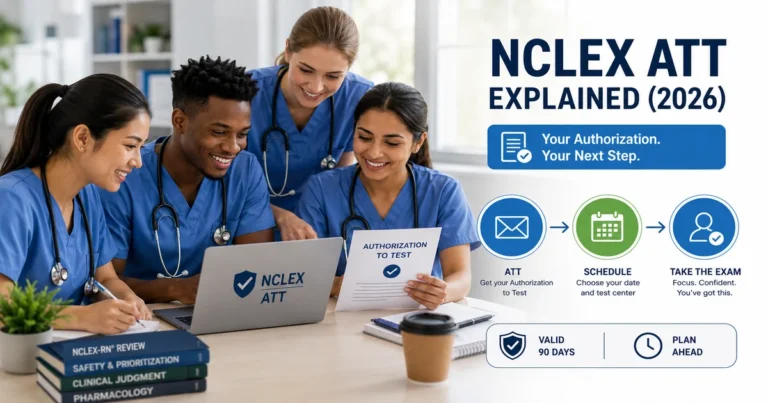
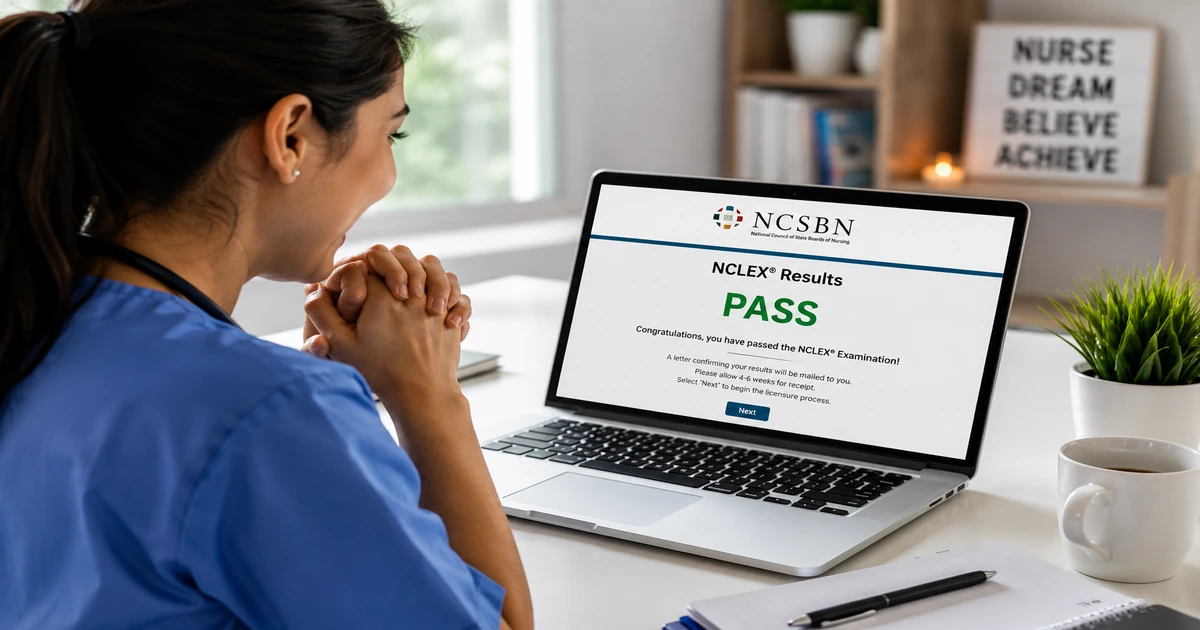
According to NCSBN’s official NCLEX results information, candidates seeking licensure in the U.S. can access unofficial results as early as two business days after finishing their exam, provided their NRB participates in the Quick Results service. Not every jurisdiction participates, so this isn’t guaranteed to apply to your situation.
Official results come from your NRB directly, and NCSBN states that candidates should generally expect them within about six weeks of testing. This is described as a general timeframe rather than a fixed guarantee, and actual processing time can vary by jurisdiction. If more than six weeks pass without an official result, NCSBN’s guidance is to contact your nursing regulatory body directly, rather than Pearson VUE or NCSBN’s own offices, since neither can release results to you.
It’s worth being clear about what unofficial results are and aren’t. Quick Results are computer-generated and considered reliable, but they are not your license and are not accepted as legal proof of licensure. Only your official result, issued by your NRB, carries that weight.
How to Check Your NCLEX Results
For unofficial results, you’ll sign into your existing Pearson VUE account, using the same login you registered with originally, and check whether Quick Results is available for your exam. There’s a small service fee involved, and NCSBN notes this fee on its official Quick Results page. If you don’t have your login details, Pearson VUE support can help you recover them, not NCSBN directly.
For your official result, you’ll go through your state or territory’s board of nursing rather than Pearson VUE or NCSBN. Many boards now post results online or send electronic notification, though some processes still vary by jurisdiction. Because exact steps differ from state to state and country to country, it’s worth checking your specific board’s website directly rather than relying on general guidance for this step.
What Does a Passing NCLEX Result Mean?

A passing result confirms that your demonstrated ability met the exam’s passing standard, but it isn’t the same thing as holding an active nursing license. Licensure is issued by your nursing regulatory body, and depending on your jurisdiction, there may be additional steps, such as background checks, fee payments, or final application processing, before your license is officially active.
Practically, that means you shouldn’t assume you’re cleared to begin practicing the moment you see a passing Quick Result. Confirm your license status directly through your board of nursing’s verification system before starting employment, since that’s the record employers and regulatory bodies will actually check.
What Happens If You Do Not Pass the NCLEX?
An unsuccessful result is difficult, but it isn’t the end of the process. NCSBN’s retake policy allows candidates to retest 45 days after their previous exam administration, though some individual NRBs require a longer waiting period, so it’s worth confirming your specific jurisdiction’s rule before planning your next attempt.
This is also the point where it’s worth honestly reassessing your preparation rather than repeating the same approach unchanged. Reviewing common pitfalls in our NCLEX mistakes to avoid guide, rebuilding your timeline with a 30-Day NCLEX Study Plan adapted to your specific gaps, and returning to NCLEX practice questions with more targeted rationale review are all reasonable next steps. If you found it difficult to identify what went wrong on your own, NCLEX coaching for nurses can offer a more structured, personalized approach heading into a retake. A full breakdown of how to plan a retake is a topic in its own right, so this article focuses specifically on what an unsuccessful result means and where to go from here.
What Is the NCLEX Candidate Performance Report?

If you don’t pass, you’ll receive a Candidate Performance Report alongside your official result. According to NCSBN, this report is meant to serve as a guide for your next attempt, showing how your performance compared to the passing standard across different content categories.
It isn’t a percentage score, and it isn’t designed to predict how a future attempt will go. Our NCLEX Candidate Performance Report guide walks through exactly how to read it and turn it into a focused study plan, so we won’t repeat that breakdown here.
Can You See Your NCLEX Score?
Not in the way most candidates expect. The NCLEX doesn’t report a raw percentage or point total, and there’s no fixed number like “75% correct” that determines a pass. Instead, your result reflects how your ability estimate compared to the exam’s passing standard, a benchmark set through NCSBN’s formal review process rather than a simple percent-correct threshold.
This is directly tied to how Computer Adaptive Testing works: because no two candidates answer the same set of questions, a shared percentage scale wouldn’t accurately reflect performance the way it might on a fixed-form test. Your result is pass or fail, with category-level detail only provided through the CPR if you don’t pass.
What Should You Do After Receiving Your NCLEX Results?
If you passed:
- Confirm your official license status through your board of nursing’s verification system before starting work
- Complete any remaining licensing steps your NRB requires, such as fee payments or final applications
- Keep documentation of your results and licensure for your employment records
- If you’re applying for jobs, check what documentation your employer expects during onboarding
If you did not pass:
- Review your Candidate Performance Report carefully before making any assumptions about what went wrong
- Confirm your jurisdiction’s specific retake waiting period with your board of nursing
- Reassess your study approach rather than repeating your previous preparation unchanged
- Consider structured support, such as coaching, if you’re unsure how to interpret your results or rebuild your plan
How to Prepare for Your Next Step After NCLEX Results
Where you go from here depends entirely on which result you received. A passing result shifts your focus toward licensure logistics and employment. An unsuccessful result shifts your focus back toward preparation, ideally with a clearer sense of where your specific gaps were.
Either way, official information about licensure requirements, retake policies, and jurisdiction-specific processes should come from your nursing regulatory body and NCSBN directly, since these details can vary and change over time.