NCLEX for International Nurses (2026): Complete Guide for Internationally Educated Nurses
If you trained as a nurse outside the United States, the NCLEX itself is only part of a longer story. NCLEX for international nurses involves the same examination taken by every other candidate, but the path leading up to it, and sometimes the steps that follow, often includes additional documentation, evaluation, and jurisdiction-specific decisions that U.S.-educated candidates don’t typically encounter.
This guide walks through where that path diverges, what to research before you commit to a specific state, and how to think about preparation once your eligibility is confirmed. It’s worth being clear upfront: NCLEX examination requirements and state Board of Nursing licensure requirements are related but distinct, and this article treats them that way throughout, since conflating the two is one of the most common sources of confusion for internationally educated candidates.
What Is the NCLEX for International Nurses?

Internationally educated nurses (IENs) take the exact same NCLEX-RN or NCLEX-PN examination as any other candidate pursuing that license category. There’s no separate “international version” of the exam itself. What differs is the licensure pathway leading up to it — the documentation, credential verification, and sometimes English proficiency requirements your specific Board of Nursing may require before declaring you eligible to sit the exam.
Because U.S. nursing licensure is regulated at the state and territory level rather than federally, these pathway requirements vary considerably depending on which jurisdiction you’re applying to, which is a theme that runs through nearly every section below.
Can International Nurses Take the NCLEX?

Yes, provided the nursing regulatory body (NRB) in your chosen jurisdiction determines you’re eligible. According to NCSBN, internationally educated candidates go through the same fundamental process as domestic candidates — applying to a specific state or territory’s board of nursing, meeting that board’s eligibility criteria, registering for the exam, and receiving an Authorization to Test once eligibility is confirmed.
The distinction is that your specific NRB makes the final determination based on your education, documentation, and any additional requirements they apply to internationally trained candidates. This isn’t a formality; different boards genuinely differ in what they require, so eligibility confirmed in one state doesn’t automatically transfer to another.
NCLEX Requirements for Internationally Educated Nurses

A handful of areas tend to come up repeatedly for IENs, though not every requirement applies in every jurisdiction:
- Nursing education verification — confirming your program and coursework
- Credential evaluation — assessing whether your education is substantially equivalent to a U.S. nursing program, where your board requires it
- License verification — confirming your existing nursing license or registration from your home country, where applicable
- English proficiency documentation — required by some boards depending on where you were educated
- Identification and documentation standards — matching your registration information exactly
- Social Security Number or Individual Taxpayer Identification Number — required by some states for licensure, though not universally, and sometimes not required at the NCLEX application stage even where it’s eventually needed for licensure
- Criminal background check requirements — applied by many boards regardless of education background, though specific processes can differ
None of these should be treated as a universal checklist. Some boards require several of these; others require only one or two. Confirming the specific list for your target jurisdiction directly with that board is the only reliable way to know what applies to you.
Credential Evaluation for International Nurses
Credential evaluation exists to establish that your nursing education is substantially equivalent to a U.S. nursing program, giving your Board of Nursing a standardized way to assess education completed under a different system. Many, though not all, boards require this step for internationally educated candidates before they’ll grant NCLEX eligibility.
The organization that performs this evaluation, and the specific report format required, can vary by jurisdiction. Some boards accept reports from more than one recognized credential evaluation agency; others require a specific agency’s report and don’t accept alternatives. Because of this variation, don’t assume that a credential evaluation completed for one state will automatically be accepted by another, and don’t assume any single agency is mandatory nationwide. Your chosen Board of Nursing’s own instructions are the authoritative source here, not general advice from other candidates’ experiences.
English Language Requirements for International Nurses
English proficiency requirements are another area where jurisdiction matters enormously, and it’s a common source of confusion. Not every internationally educated nurse is required to take an English language exam. Some boards waive this requirement for candidates educated in English-medium programs or in countries where English is the primary language of instruction; others require documented proficiency regardless of educational background.
Where an English proficiency exam is required, accepted tests can include options like IELTS or the Occupational English Test (OET), depending on the specific board’s accepted list. If you’re researching OET as part of your own pathway, EngliishExams.com’s OET preparation resources cover that exam in detail — but it’s worth confirming with your target board first whether an English exam is required at all, and if so, which ones they accept, rather than assuming OET or any other specific test applies to your situation.
Choosing the Right State Board of Nursing
This decision shapes nearly everything that follows, which is why it’s worth researching thoroughly before you begin submitting applications or paying fees. Requirements for credential evaluation, English proficiency, Social Security Number necessity, and general processing timelines all vary by jurisdiction, sometimes significantly.
Start with the official website of any board you’re considering, and cross-reference what you find with NCSBN’s licensure guidance, since NCSBN maintains information connecting candidates to individual state boards. Avoid basing your jurisdiction choice on secondhand accounts from social media or forums, since another candidate’s experience in one state may not reflect current requirements, or may not apply to your specific state at all.
Documents International Nurses May Need
The specific document list varies by board, but commonly requested items include nursing school transcripts and records, proof of completed nursing education, verification of any existing nursing license from your home country, government-issued identification, credential evaluation reports where required, and English-language test results where applicable. Some boards request additional documentation specific to their own process.
Treat any list like this as a starting point for your own research, not a complete or universal checklist. Confirm the exact requirements directly with your chosen board before you begin gathering documents, since requesting the wrong report or format can add weeks to your timeline.
NCLEX Registration for International Nurses
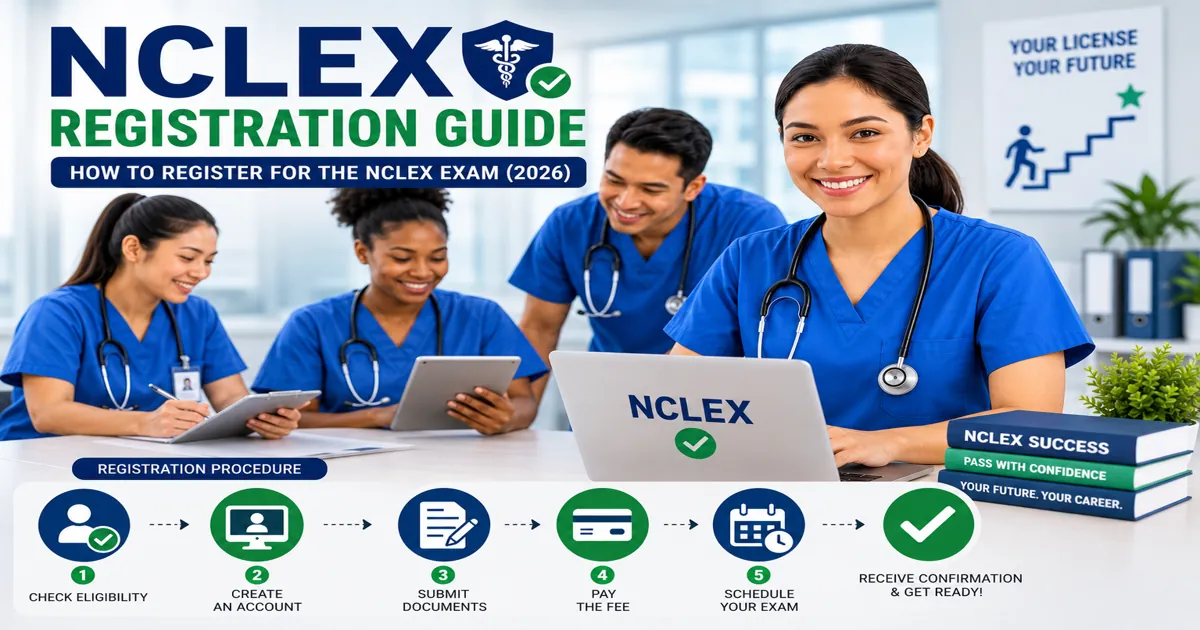
Once your chosen board’s requirements are clear to you, registration itself follows the same basic structure as it does for any candidate, though the timing relative to your credential evaluation and eligibility determination matters. Rather than repeating that process here, our NCLEX Registration Guide walks through the general registration steps in detail.
The main thing worth emphasizing for international candidates specifically: understand your target jurisdiction’s full requirements before you register, since registering prematurely, or with a jurisdiction you later decide isn’t the right fit, can mean lost time and fees.
Getting the ATT and Scheduling the NCLEX Internationally
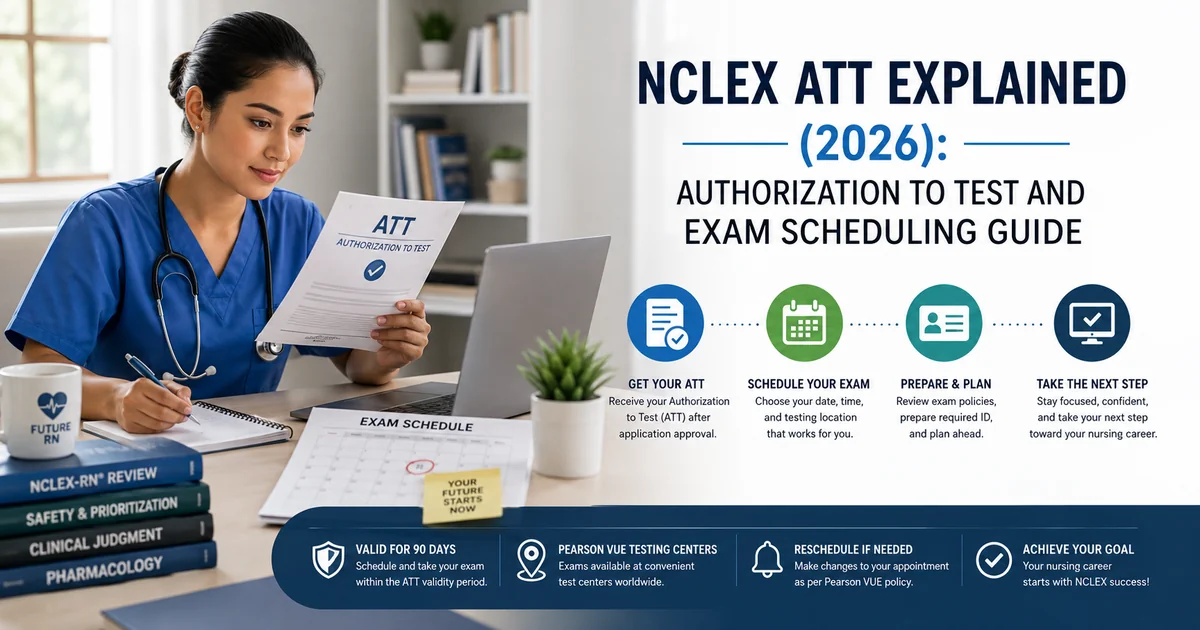
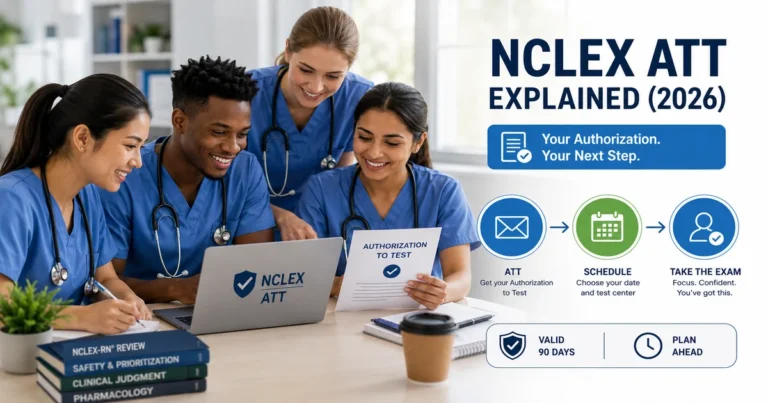
Once your board declares you eligible, you’ll receive an Authorization to Test the same way any candidate does, and you’ll need it before scheduling your exam appointment. Our NCLEX ATT guide covers the ATT process, validity period, and scheduling steps in full detail, so we won’t repeat that ground here.
One detail specifically relevant to international candidates: according to current NCLEX scheduling information, testing at an international test center, or rescheduling from a domestic center to an international one, can involve a non-refundable scheduling fee and applicable value-added tax, separate from your standard exam fee. Confirm the specific costs that apply to your test location before scheduling.
Where Can International Nurses Take the NCLEX?
NCLEX testing is available at international test centers in select locations, in addition to domestic U.S. test centers, depending on your circumstances and the jurisdiction you’re testing for. Rather than relying on a fixed list, since international test center availability changes over time, verify current locations and availability directly through Pearson VUE’s official scheduling system when you’re ready to book your appointment.
Common Mistakes International Nurses Should Avoid
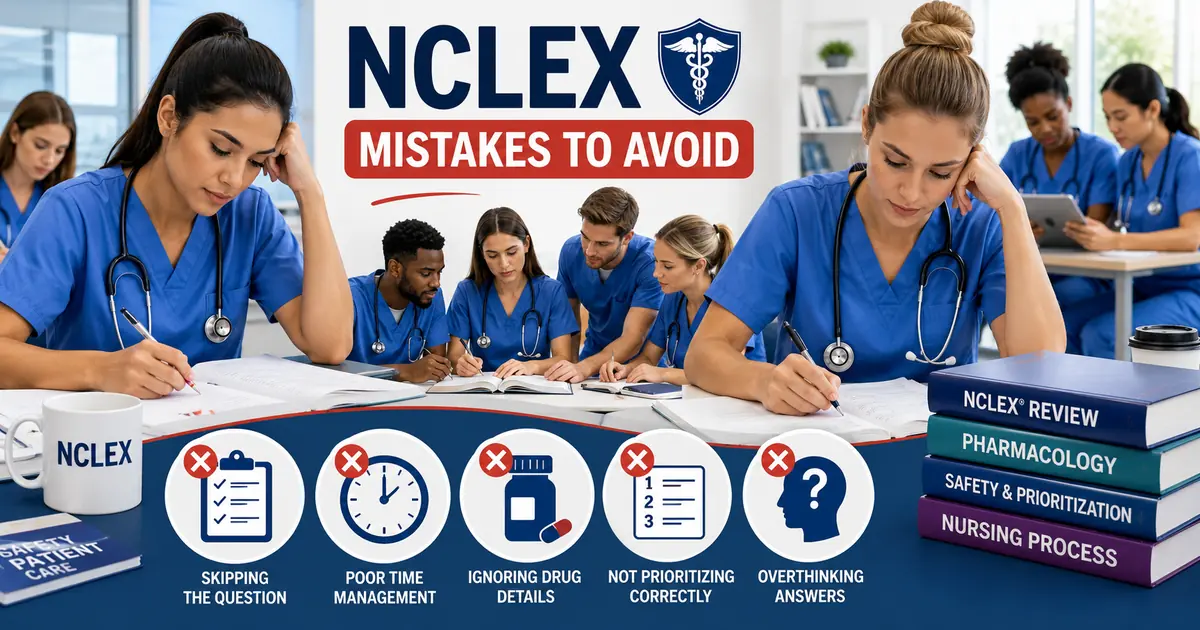
- Choosing a jurisdiction before researching its specific requirements for internationally educated candidates
- Assuming every U.S. state has identical credential evaluation, English proficiency, or SSN requirements
- Assuming every international nurse needs the same English proficiency exam, when requirements vary by board and educational background
- Submitting incomplete or inconsistent documentation across your application and credential evaluation
- Relying on outdated or secondhand information from social media instead of your board’s official instructions
- Confusing NCLEX eligibility and nursing licensure with immigration or visa requirements, which are separate processes governed by different authorities
- Waiting too long to schedule your exam after receiving your ATT, which can limit available appointment dates
- Not carefully following the specific instructions published by your chosen Board of Nursing
NCLEX for International Nurses: Step-by-Step Pathway
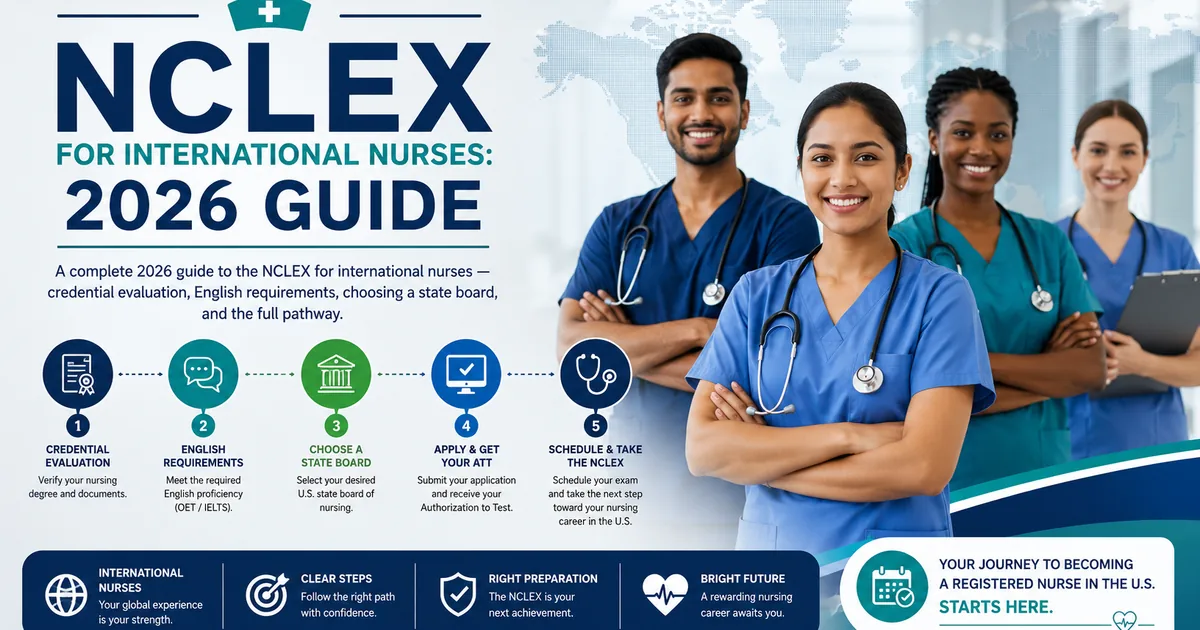
While the exact order and specific steps can vary by jurisdiction, the general pathway tends to follow this sequence:
- Choose the U.S. jurisdiction where you intend to seek licensure
- Research that jurisdiction’s specific requirements for internationally educated nurses
- Complete required education and credential documentation
- Complete credential evaluation, if your board requires it
- Complete English proficiency requirements, if applicable to your situation
- Apply to the relevant nursing regulatory body
- Register for the NCLEX through the appropriate process
- Receive your ATT once eligibility is confirmed
- Schedule your NCLEX appointment
- Prepare thoroughly and take the exam
- Complete any remaining licensure requirements after your result
How to Prepare for the NCLEX as an International Nurse

Content knowledge is only part of NCLEX readiness for many internationally educated candidates. Getting comfortable with the U.S. clinical context the exam assumes, including scope-of-practice norms and prioritization frameworks that may differ from your training environment, is often just as important as reviewing pharmacology or pathophysiology.
Building strong clinical judgment skills matters here specifically, since Next Generation NCLEX case studies test reasoning within U.S. clinical scenarios rather than isolated facts. Working consistently through NCLEX practice questions under timed conditions, reviewing rationales rather than just answers, and paying close attention to prioritization and delegation logic will help close any gap between your existing clinical experience and how the exam frames decision-making. A structured 30-Day NCLEX Study Plan can be a useful framework once your exam date is confirmed, and if you want more personalized guidance navigating both the content and the process, NCLEX Coaching can help identify where your preparation needs the most attention.
How Long Does the NCLEX Process Take for International Nurses?
There’s no fixed timeline that applies to every candidate, and it’s worth being skeptical of any source that promises one. Processing time depends on your specific jurisdiction’s requirements, how quickly your documents and credential evaluation are completed, English proficiency processing where applicable, your board’s own regulatory processing speed, and how promptly you schedule once your ATT is issued.
Because so many of these steps are sequential rather than simultaneous, delays in one stage, like a slow credential evaluation turnaround, tend to push back everything that follows. Building in extra time rather than assuming the fastest possible timeline tends to reduce stress considerably.