NCLEX Eligibility Requirements: Who Can Take the NCLEX Exam? (2026 Guide)
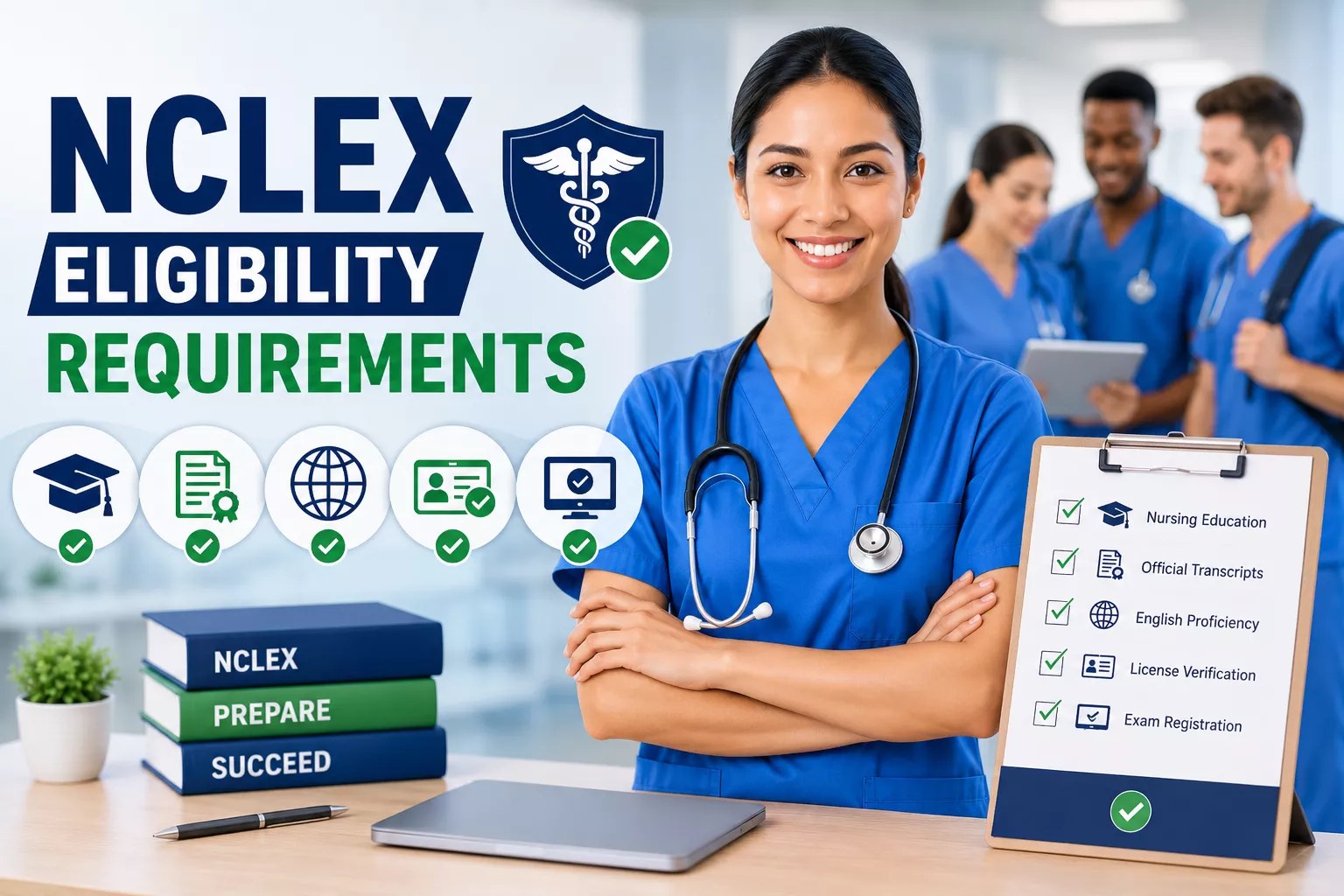
NCLEX Eligibility Requirements come Before registering for the National Council Licensure Examination (NCLEX), every nursing candidate must meet the eligibility requirements established by the nursing regulatory body where they intend to become licensed. Understanding these requirements early can save time, reduce delays, and help you begin your NCLEX journey with confidence.
Whether you are a recent nursing graduate or an internationally educated nurse, this guide explains the common eligibility requirements, required documentation, and important factors that determine whether you can take the NCLEX exam.
If you are new to the examination, we recommend starting with our NCLEX Preparation for Nurses guide to understand the overall licensing process before reviewing the eligibility requirements.
What Are NCLEX Eligibility Requirements?
NCLEX eligibility requirements are the conditions candidates must satisfy before receiving permission to sit for the licensing examination.
Although the NCLEX is administered nationwide, each nursing regulatory body sets its own eligibility requirements. Because of this, the exact application process may vary depending on where you are applying for licensure.
Candidates should always verify the latest requirements with the nursing regulatory authority responsible for their application.
Who Can Apply for the NCLEX?

Generally, the NCLEX is intended for:
Graduates of approved nursing education programs.
Internationally educated nurses seeking nursing licensure.
Candidates applying for Registered Nurse (RN) licensure.
Candidates applying for Practical or Vocational Nurse (PN/VN) licensure.
Candidates retaking the examination after an unsuccessful attempt.
Meeting the minimum eligibility requirements is the first step before beginning the registration process.
Educational Requirements
Applicants are normally required to complete an approved nursing education program before becoming eligible for the NCLEX.
Educational qualifications generally include:
Successful completion of nursing studies.
Graduation from an accredited or approved institution.
Submission of official academic records where required.
Verification of nursing education.
For internationally educated nurses, additional credential evaluation may be required before eligibility is granted.
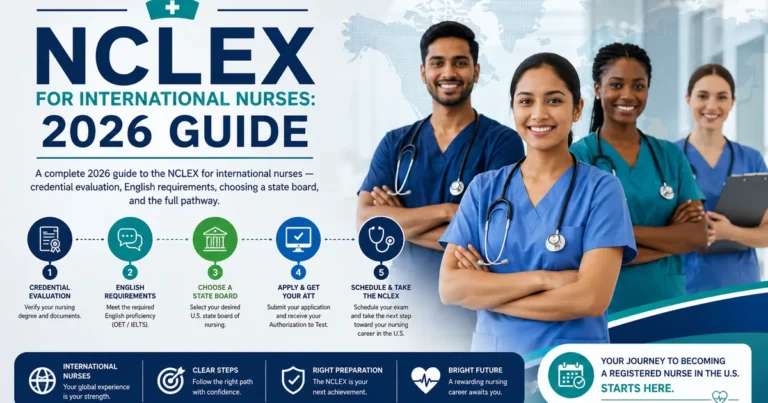
Requirements for Internationally Educated Nurses
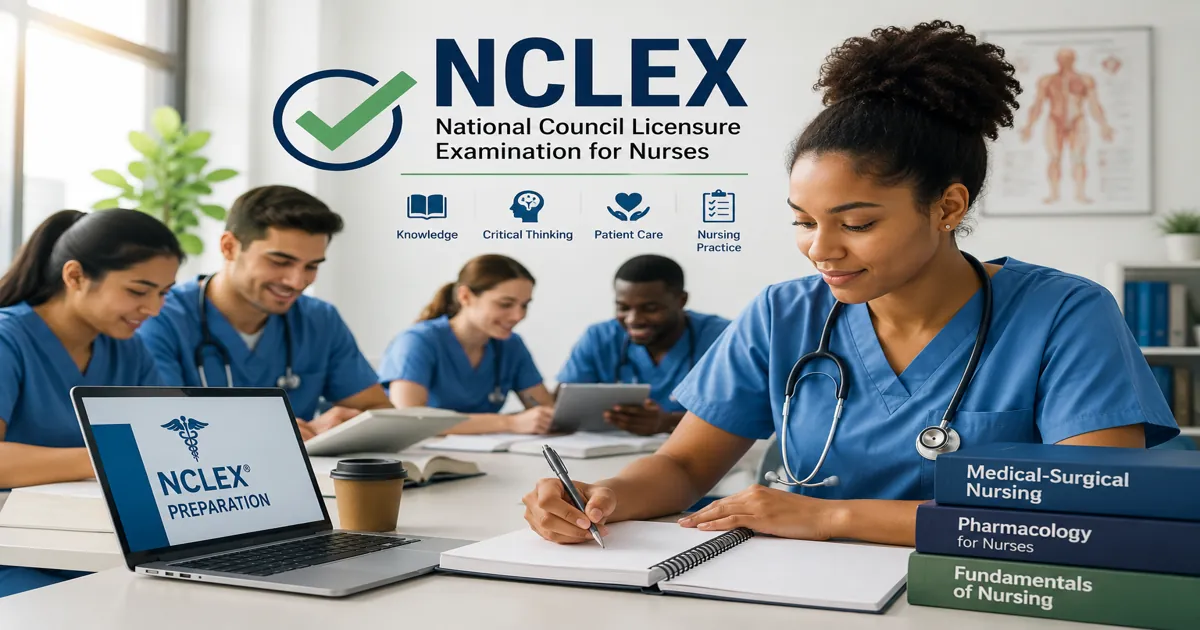
International nurses often complete additional steps before becoming eligible for the NCLEX.
Depending on the nursing regulatory authority, these may include:
Credential evaluation.
Verification of nursing education.
Verification of nursing registration in the home country.
English language requirements where applicable.
Identity verification.
Submission of supporting documents.
Preparing these documents early can significantly reduce application delays.
Identity Verification
Candidates must provide valid identification that matches all registration documents.
Common identification requirements include:
Government-issued passport.
National identification card where accepted.
Other approved identification documents.
Always ensure that the information used during registration matches your official identification exactly.
Criminal Background Checks
Some nursing regulatory bodies require criminal background screening before granting eligibility for licensure.
Requirements vary depending on the jurisdiction.
Candidates should carefully review the specific instructions provided by the nursing authority responsible for their application.
English Language Requirements
Internationally educated nurses may be required to demonstrate English language proficiency before becoming eligible for licensure.
Accepted examinations often include healthcare-specific or general English language tests, depending on the nursing authority’s requirements.
Candidates should confirm the accepted English language examinations before submitting their application.
Credential Evaluation
Many internationally educated nurses must complete an evaluation of their nursing education.
Credential evaluation helps determine whether previous nursing education meets the standards required for licensure.
This process may involve:
Academic transcript review.
Course comparison.
Clinical training evaluation.
Verification of qualifications.
Completing credential evaluation early helps prevent unnecessary delays.
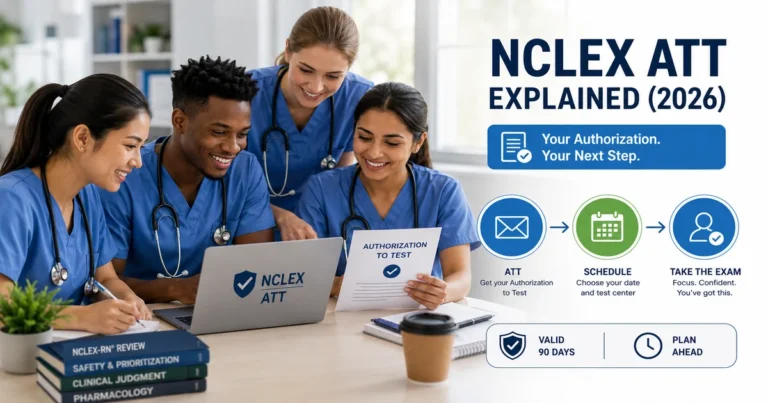
Authorization to Test (ATT)
Meeting the eligibility requirements does not automatically schedule your examination.
Once your nursing regulatory body confirms your eligibility, you may receive an Authorization to Test (ATT).
The ATT allows you to schedule your NCLEX examination through Pearson VUE.
After receiving your ATT, you can continue by following our NCLEX Registration Guide to complete the scheduling process.
Common Reasons Candidates Are Found Ineligible

Eligibility may be delayed if candidates:
Submit incomplete applications.
Provide incorrect documentation.
Fail to complete credential evaluation.
Do not meet educational requirements.
Submit identification that does not match their application.
Miss required deadlines.
Reviewing every document carefully before submission helps reduce processing delays.
How to Improve Your Application Process
To improve your chances of a smooth application:
Read all eligibility instructions carefully.
Gather documents before applying.
Verify your educational records.
Complete credential evaluation early.
Keep copies of all submitted documents.
Monitor email communications from the nursing regulatory authority.
Being organized throughout the application process helps avoid unnecessary setbacks.

Understanding the NCLEX eligibility requirements is an essential first step toward becoming a licensed nurse. Whether you completed your nursing education locally or internationally, preparing your documents carefully and following the correct application process can help you avoid delays and move confidently toward your examination.
Once you have confirmed your eligibility, the next step is completing your registration and focusing on effective NCLEX preparation.
Ready to Continue Your NCLEX Journey?
Now that you understand the eligibility requirements, continue preparing by exploring our NCLEX Registration Guide, NCLEX Preparation for Nurses, How to Pass the NCLEX Exam, NCLEX Study Plan, and NCLEX Practice Questions.
If you need structured guidance throughout your preparation, visit our NCLEX Coaching for Nurses page to learn how personalized support can help you prepare with confidence.
Take the next step today and move closer to achieving your goal of becoming a licensed nurse.

[…] exploring our NCLEX Preparation page, NCLEX Preparation for Nurses guide, NCLEX Registration Guide, NCLEX Eligibility Requirements, NCLEX Exam Fees, and NCLEX Coaching for Nurses resources on […]
[…] your eligibility and paperwork early. Before you get deep into study mode, make sure your NCLEX eligibility requirements and NCLEX registration are sorted, so a scheduling delay doesn’t derail your study […]
[…] study plan around these habits, it’s worth reviewing your NCLEX registration timeline and eligibility requirements early, so your clinical judgment practice fits comfortably within your overall preparation window […]
[…] make sure the logistics are locked in too — check your NCLEX registration timeline, confirm your eligibility requirements, and review the current NCLEX exam fees so nothing catches you off guard close to your test […]