OET Exam Preparation for Nurses | Complete 2026 Guide

The Occupational English Test (OET) is one of the most important English language exams for nurses and healthcare professionals planning to work or study abroad. Accepted in countries such as the United Kingdom, Australia, New Zealand, Ireland, and Dubai, OET evaluates real healthcare communication skills used in clinical environments.
Many nurses struggle with OET because of time pressure, medical vocabulary, and the specific communication style required in each sub-test. However, with the right preparation strategy, practice methods, and exam techniques, passing OET becomes achievable.
This complete OET exam preparation guide covers everything nurses need to know about OET Reading, Writing, Listening, and Speaking, including study plans, preparation tips, scoring information, and expert strategies to help you succeed in 2026.
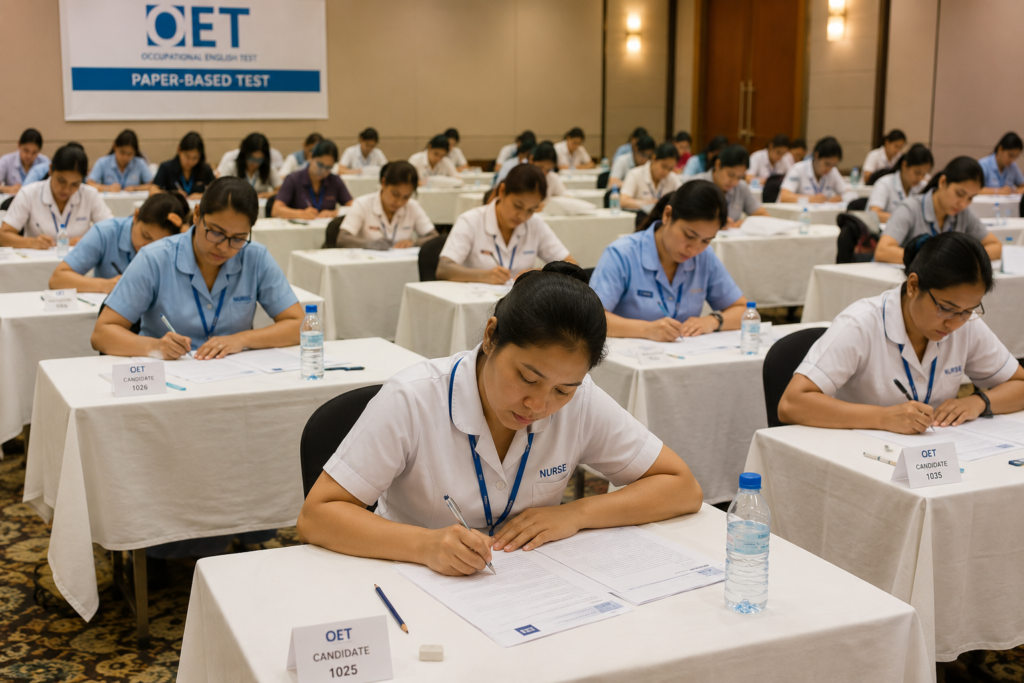
The Occupational English Test (OET) is an English proficiency exam designed specifically for healthcare professionals. Unlike general English exams, OET focuses on real medical and healthcare communication scenarios used in hospitals, clinics, and healthcare environments.
OET is accepted by healthcare boards, hospitals, and regulatory organizations in multiple countries. Nurses commonly take OET to meet English language requirements for international registration and employment.

| OET | IELTS |
|---|---|
| Healthcare-focused | General English |
| Medical scenarios | Academic/general topics |
| Easier for many nurses | Broader vocabulary |
| Accepted by nursing boards | Widely accepted globally |
Many nurses prefer OET because the exam uses healthcare-related situations that are more familiar to medical professionals. This often makes preparation more practical and less stressful compared to general English exams.

OET Exam Structure
OET Listening
The Listening sub-test evaluates a candidate’s ability to understand spoken English in healthcare settings, including consultations, lectures, and professional discussions.
OET Reading
OET Writing
OET Speaking
Successful OET preparation requires consistency, targeted practice, and familiarity with the exam structure. Nurses should focus on improving medical vocabulary, time management, listening accuracy, and professional writing techniques.
The most effective preparation methods include:
– Practicing with OET-style questions
– Reviewing sample healthcare letters
– Improving reading speed
– Listening to medical conversations
– Attending live revision classes
– Completing timed mock tests
Common Mistakes Nurses Make in OET

- Poor time management
- Memorizing templates incorrectly
- Weak grammar in writing
- Not practicing speaking role-plays
- Ignoring official scoring criteria
OET Score Requirements for Nurses
United Kingdom (UK)
Most nursing regulators and employers in the UK generally require:
Minimum Grade B (350+) in:
Listening
Reading
Speaking
Minimum Grade C+ (300+) in:
Writing
Accepted by the Nursing and Midwifery Council (NMC).
Australia
For nurses applying through the Nursing and Midwifery Board of Australia (NMBA):
Minimum score of 350 (Grade B) in:
Listening
Reading
Speaking
Minimum score of 300 (Grade C+) in:
Writing
New Zealand
The Nursing Council of New Zealand generally requires:
Minimum Grade B (350+) in:
Listening
Reading
Speaking
Minimum Grade C+ (300+) in:
Writing
OET score requirements may change over time depending on updates from nursing councils, immigration authorities, or employers. Always verify the latest requirements directly from the official regulatory bodies before applying.
How Long Does It Take to Prepare for OET?

Preparation time depends on a candidate’s current English level and familiarity with healthcare communication. Many nurses prepare for OET within 6–12 weeks using structured study plans, practice questions, and revision classes.
Frequently Asked Questions About OET
1. What is OET?
OET (Occupational English Test) is an English language test designed specifically for healthcare professionals such as nurses, doctors, pharmacists, and dentists. It assesses Listening, Reading, Writing, and Speaking skills in medical and healthcare settings.
2. Is OET easier than IELTS for nurses?
Many nurses find OET easier than IELTS because the test uses healthcare-related situations and medical vocabulary instead of general English topics.
3. What OET score is required for nurses?
Most countries require:
- B grade (350+) in Listening, Reading, and Speaking
- C+ grade (300+) in Writing
Requirements may vary depending on the country and regulatory body.
4. Which countries accept OET for nurses?
OET is accepted in countries including:
- United Kingdom
- Australia
- New Zealand
- Ireland
- United States
- Canada
5. How long is the OET exam?
The OET test takes approximately 3 hours and includes Listening, Reading, Writing, and Speaking sections.
6. How much does OET cost?
OET fees vary by country, but the test generally costs around USD $455. Always check the official OET website for updated pricing.
7. Can I take OET online?
Yes. OET is available both:
- on computer at test venues
- and as OET@Home in selected countries
Availability may vary by location.
8. How many times can I take OET?
There is no limit to the number of times you can take OET. You can retake the test whenever needed.
9. Is OET accepted in the UK?
Yes. OET is accepted by the Nursing and Midwifery Council (NMC) for nurses and other healthcare professionals.
10. What is the passing score for OET?
OET does not technically have a “pass” or “fail.” Different organizations require different grades, but most nursing boards require at least Grade B in major sections.
11. How long are OET results valid?
OET results are usually valid for 2 years, depending on the country and healthcare regulator.
12. Can I combine OET scores?
Some nursing regulators allow score clubbing or combining scores from two sittings, while others do not. Always confirm with the specific regulatory authority.
13. What is the OET Writing test like?
The Writing section requires healthcare professionals to write a referral, discharge, or transfer letter based on a medical case note scenario.
14. Is OET difficult?
The difficulty level depends on your English skills and preparation. Healthcare professionals often find OET more relevant and practical than general English exams.
15. How can I prepare for OET?
You can prepare by:
- practicing official sample tests
- improving medical vocabulary
- studying healthcare communication
- taking mock exams
- joining OET preparation classes
16. How long should I study for OET?
Most candidates prepare for 4 to 12 weeks depending on their English level and target score.
17. Can I work abroad with OET?
Yes. OET is widely accepted for healthcare registration and migration purposes in several countries.
18. Is OET better than IELTS?
For healthcare professionals, OET is often considered better because it focuses on real medical communication scenarios.
19. What professions can take OET?
OET is available for:
- nurses
- doctors
- pharmacists
- dentists
- physiotherapists
- radiographers
- veterinarians
- occupational therapists
and other healthcare professionals.
20. How many sections are in OET?
OET has four sections:
- Listening
- Reading
- Writing
- Speaking
21. What happens if I fail OET?
You can retake the test. Some institutions may allow you to retake only the sections where you did not achieve the required score.
22. How do I register for OET?
You can register online through the official OET website and choose your preferred test date and location.
23. Is OET recognized internationally?
Yes. OET is recognized by healthcare boards, hospitals, universities, and immigration authorities worldwide.
24. How often is OET conducted?
OET exams are held multiple times each month in many countries around the world.
25. What is the difference between OET paper-based and computer-based tests?
The content and scoring are the same. The only difference is the test delivery format:
- paper-based uses physical answer sheets
- computer-based uses a computer interface
Start Your OET Preparation Today
Preparing for OET becomes easier with the right guidance, practice resources, and proven strategies. Whether you are preparing for OET Reading, Writing, Listening, or Speaking, consistent practice and expert support can significantly improve your chances of success.
Explore our latest OET preparation articles, practice resources, and nursing exam strategies to begin your journey toward international nursing opportunities.